
Our Story
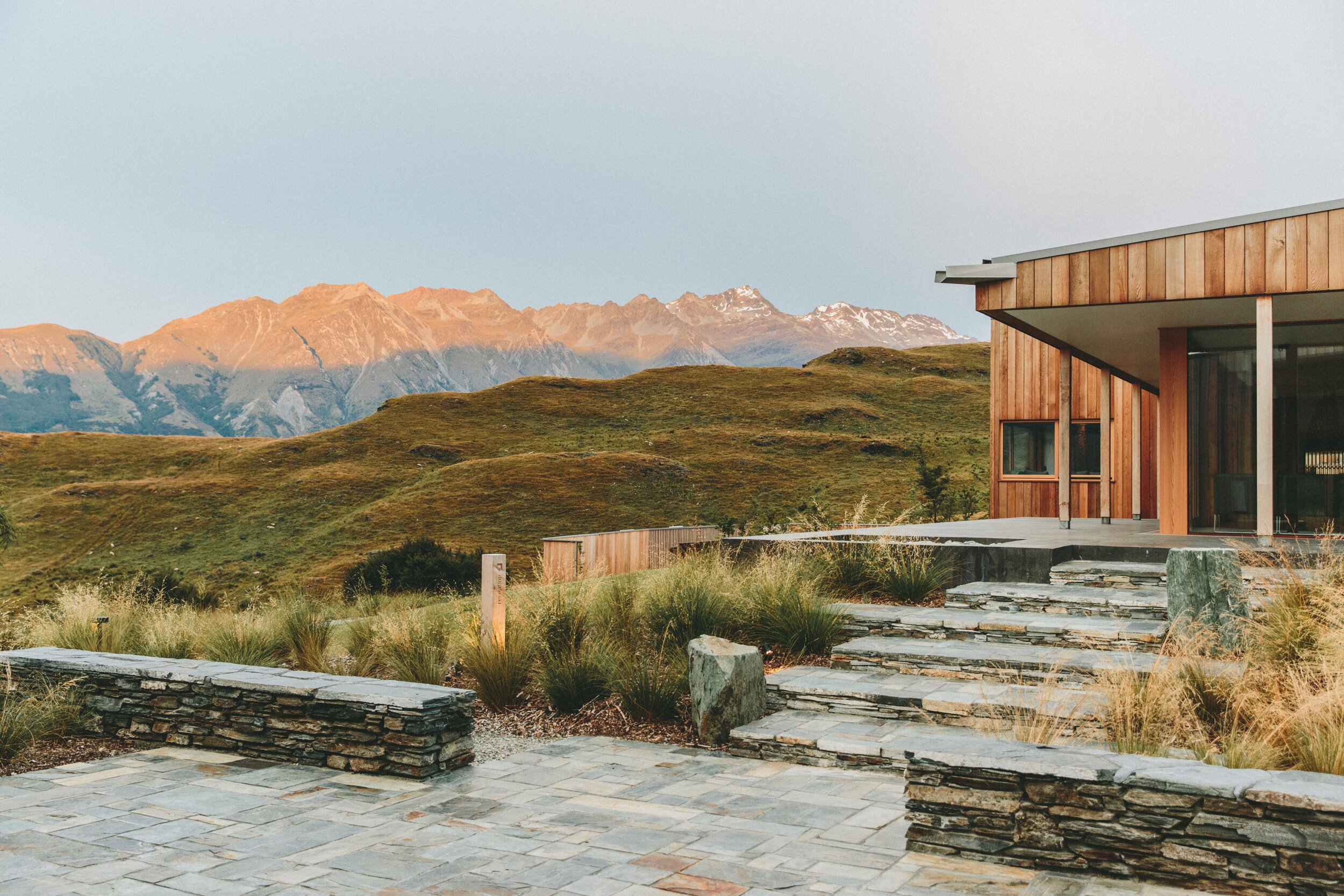
The story of this wood is long and varied. Originally it grew in solitude for 200 years on the Queen Charlotte Islands, then it was destined for use in World War II aircraft, then it provided a home for loggers and guests in Knight Inlet for 67 years, until now it is being repurposed into furniture and musical instruments that will last generations more.
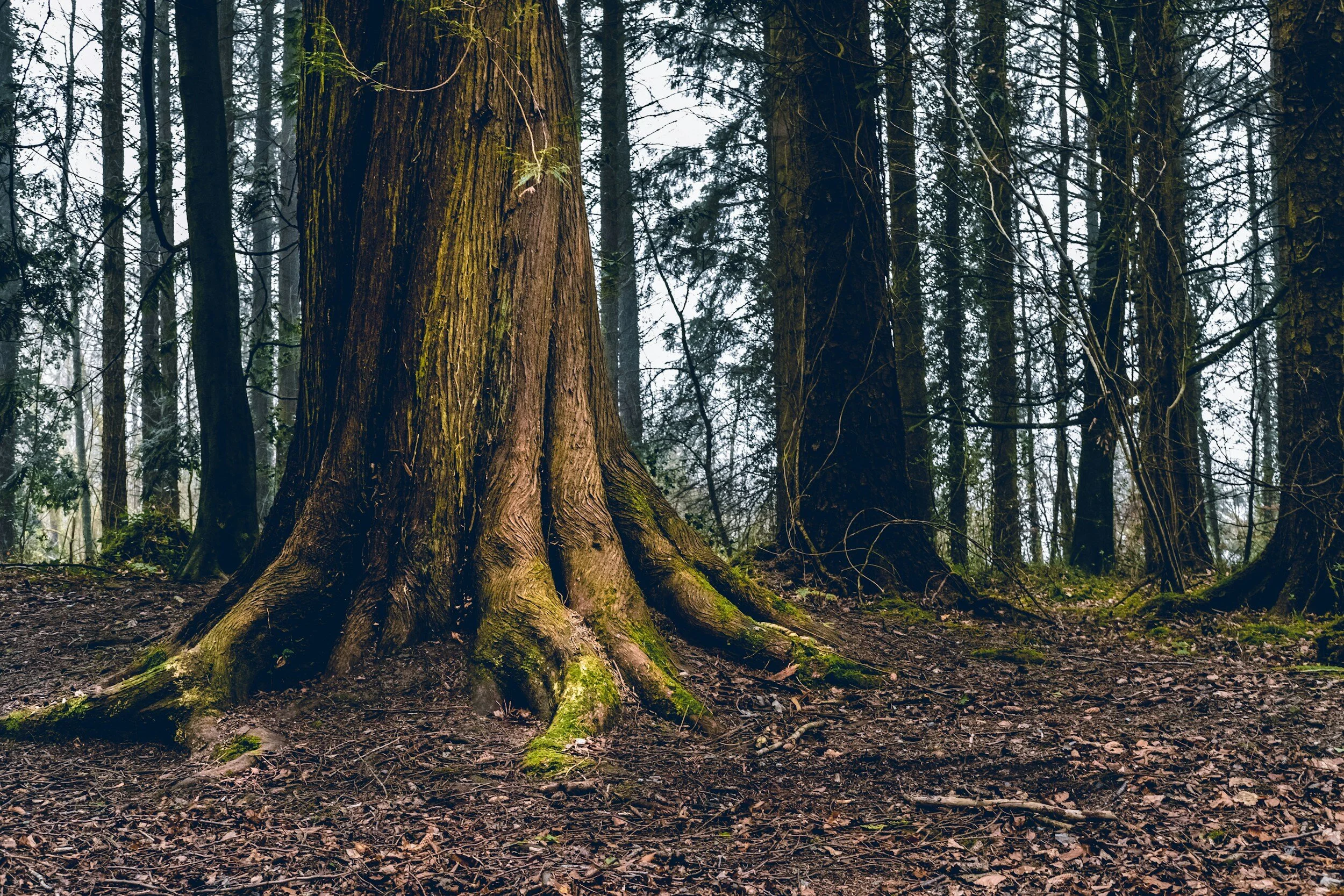
Picea sitchensis
Sitka Spruce is a large, coniferous, evergreen tree that grows to almost 100 meters tall with a trunk diameter that can exceed 5m. Its name is derived from the community of Sitka in southeast Alaska, where it is prevalent. Its range hugs the western coast of Canada and the US, continuing south into northernmost California.
Aviation-Grade Wood
In the early days of aviation, airplanes were largely constructed of wood due to its advantageous strength-to-weight ratio, workability, abundance, and low cost. By the mid-1930s, wooden aircraft construction was falling out of style in favor of various metals like aluminum and steel. The de Havilland Aircraft Company, however; had recently pioneered using composite wood construction on their DH.91 Albatross transport aircraft and around this same time, had started developing their DH.98 Mosquito multi-role combat aircraft which ultimately was used heavily in World War II.
Although inferior in tension, the strength-to-weight ratio of wood is equal to or better than light aluminum alloys or steel. There were many different types of woods used in the construction of these planes, but anywhere requiring higher strength they used Sitka Spruce for it has one of the greatest strength-to-weight ratios. There was a high demand for the de Havilland Mosquito during World War II and the Royal Air Force needed vast quantities of Sitka Spruce timber.
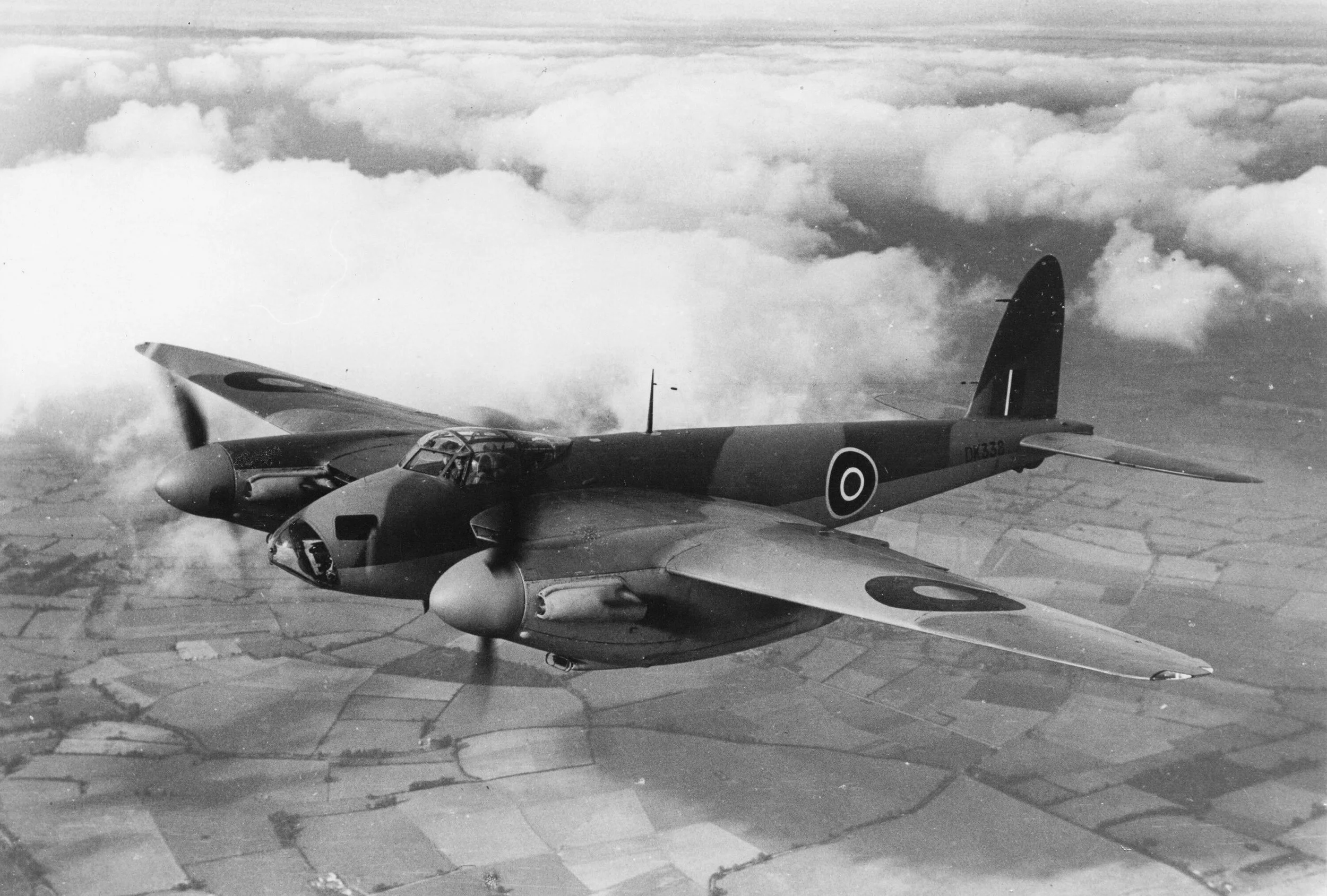
A de Havilland DH.98 Mosquito combat aircraft, 1942
Fotoafdrukken Koninklijke Luchtmacht
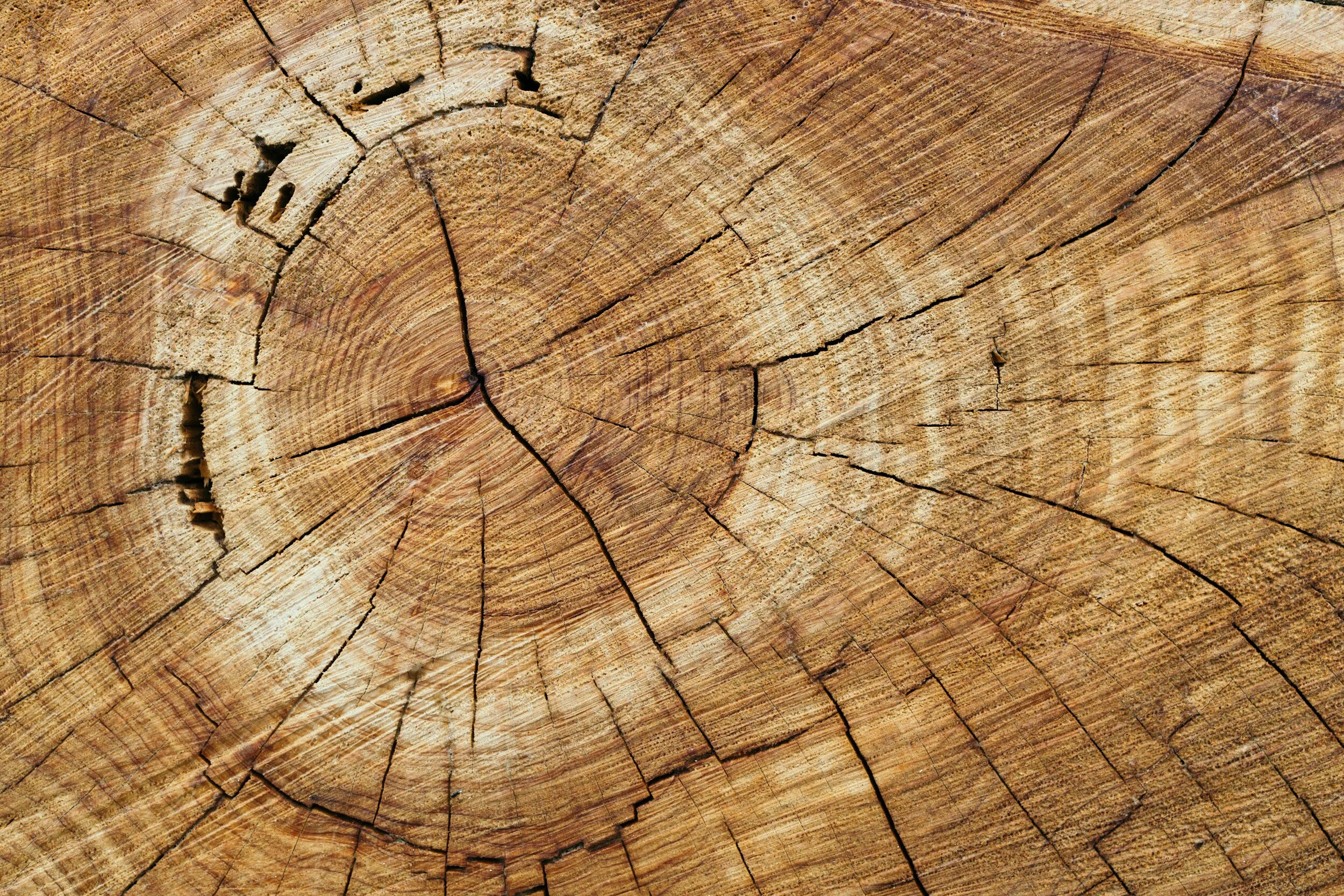
Springfield Logging Co.
A suitable supply of suitable timber was found in the Queen Charlotte Islands (now Haida Gwaii) off the northern Pacific coast of Canada. The RAF awarded contracts to many logging contractors operating in the area to supply their needs, one of which being to Bill Sawchuck of the Springfield Logging Co. who obtained the rights to log the great forest giants in the Queen Charlottes. As the war progressed it became clear that demand was not sufficient to use all the fallen timber so the extra logs were returned to the contractors in 1945.
The Sawchucks used this opportunity and towed them to Knight Inlet on British Columbia’s central coast. There they constructed them into floating rafts, 2 or 3 alternating layers deep, with strong steel cables holding them tight. They established their logging camps on these rafts by erecting A-frames and various other buildings for accommodation and living. By towing these floating logging camps around they would easily move their camps to where they needed them to best support their logging activities in the Knight Inlet watershed.
Knight Inlet Lodge
Over 30 years later, in 1979, a little-known fishing lodge named the Hoeya “Hilton” (later Knight Inlet Lodge) purchased two of the three floating rafts from the now defunct and inactive Springfield Logging Co. and relocated them to Glendale Cove about halfway up the 125km long Knight Inlet. Here a very successful sport fishing operation was established that ran for 17 years until it was purchased in 1996 and transformed into an eco-tourism lodge with guests coming from all over the world to view grizzly bears and other wildlife. It was around this time that the third and final of the original rafts was purchased and added to the lodge.
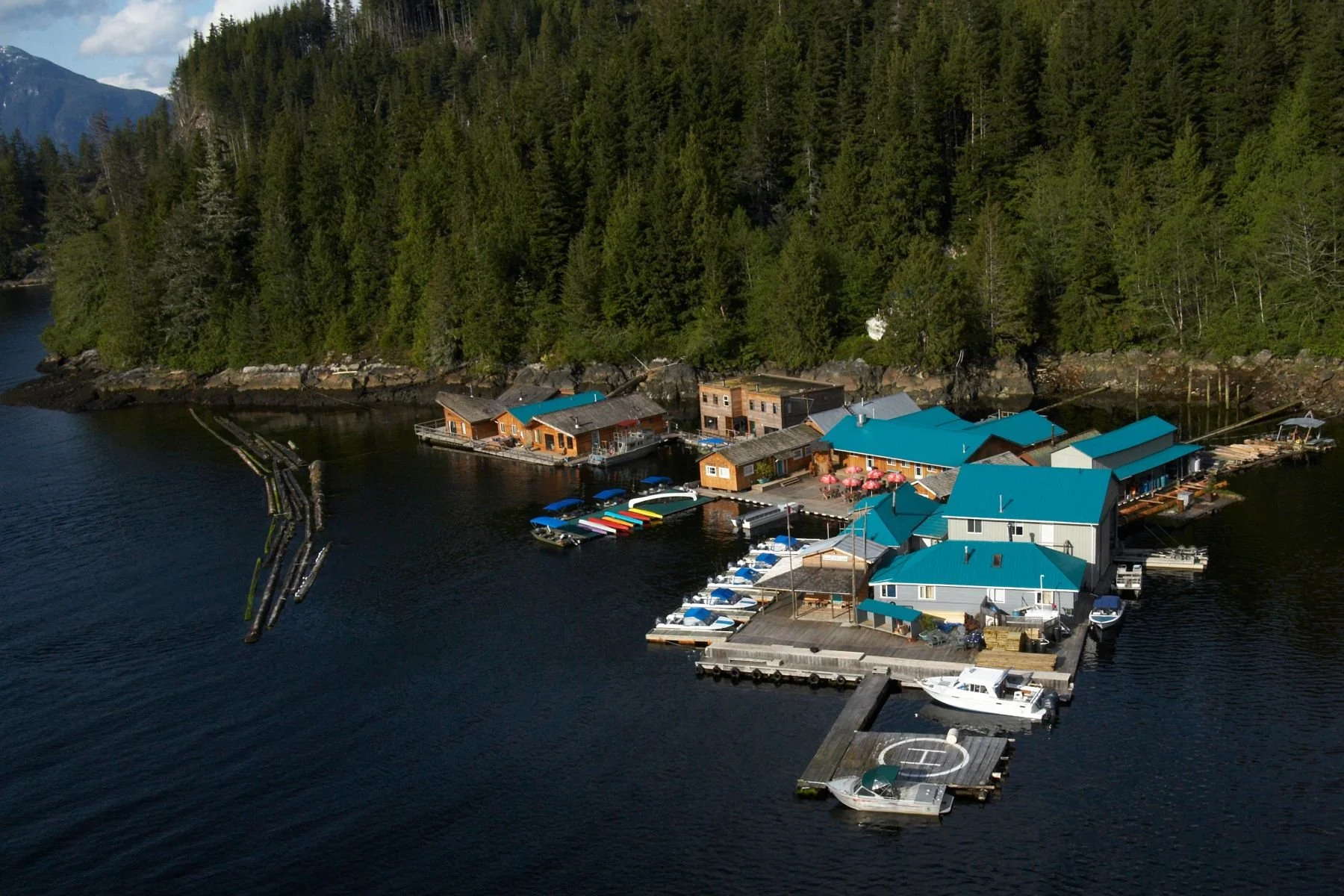
Knight Inlet Lodge
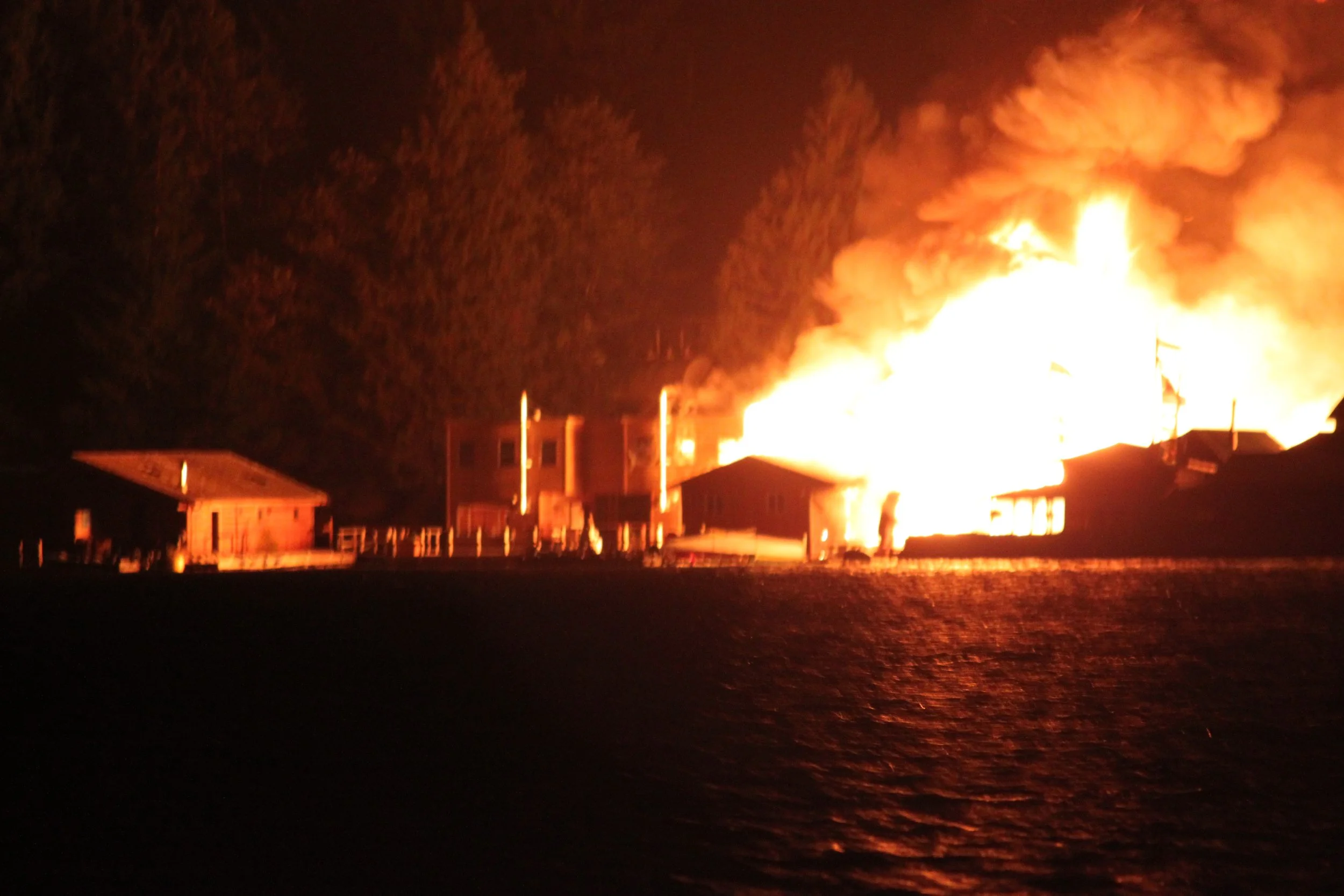
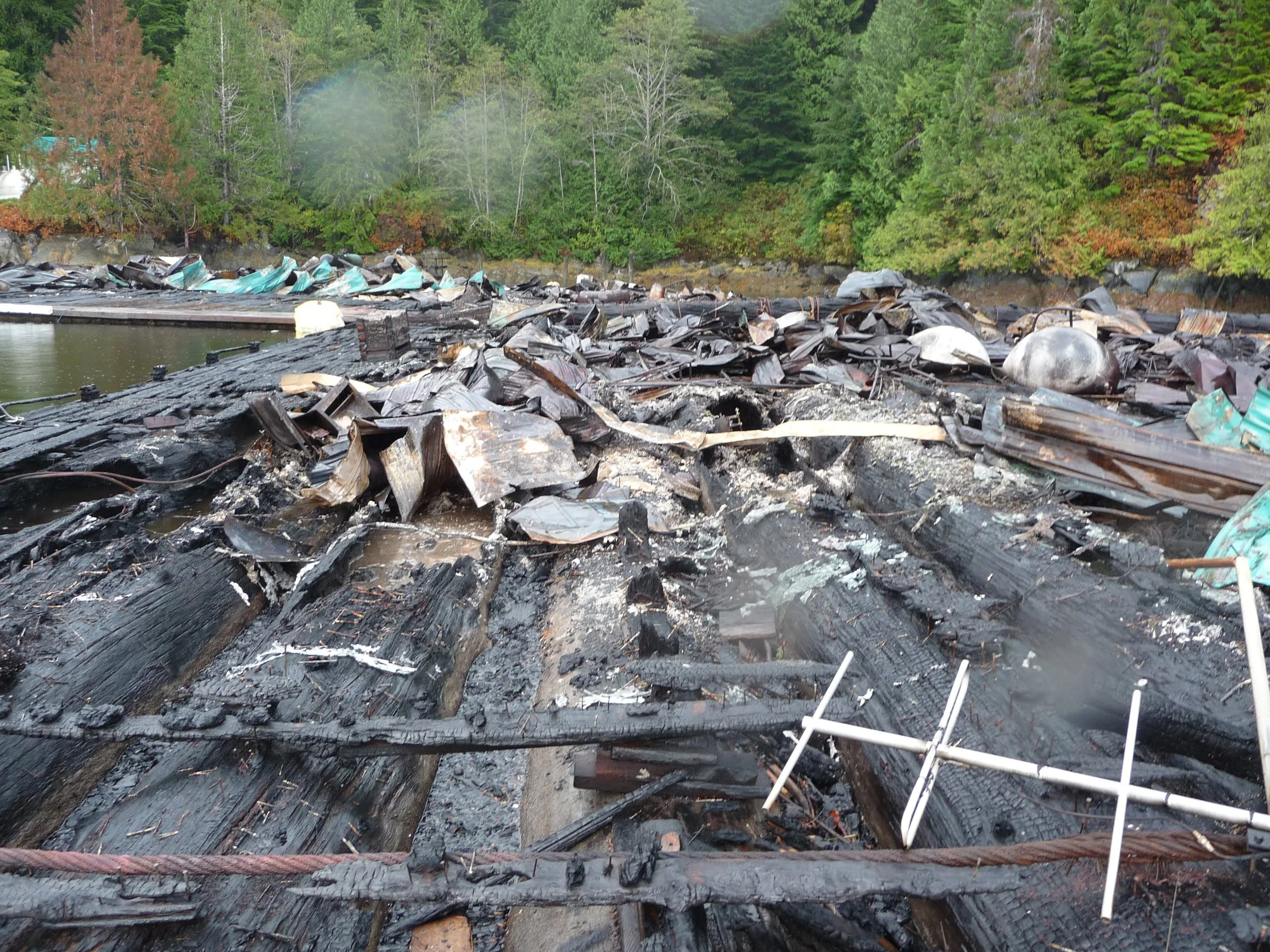
Knight Inlet Lodge after the fire, 2012
Catastrophe
Disaster struck in in 2012 when catastrophic fire consumed the lodge in a 4-hour burst of flame. Thankfully no one was injured but the lodge was completely destroyed. All that remained was the logs that were still floating in the ocean with the top-most logs being charred from the fire. Knight Inlet Lodge was rebuilt and continues to operate to this day but that is a story for another time. The question at the time was what to do with the logs that had such a profound story behind them. This is when it was decided to tow the logs to Campbell River on Vancouver Island and move them to dry land for the first time since they were returned to the Sawchucks in 1945.
Teredo Navalis
Most of the trees were well over 200 years of age prior to cutting and had been immersed in salt water for 68 years. While in the water, Teredo Navalis (commonly ‘naval shipworm’) feasted on the outer parts of the logs turning them into what might charitably be called abstract art and leaving behind calcareous material along the inside surface of the tunnels they bored into the wood. The combination of the salt-water immersion and Teredo deposits has made the wood incredibly difficult to work with, often ruining a new saw blade after only an hour of use cutting this wood.
Furniture and Instruments
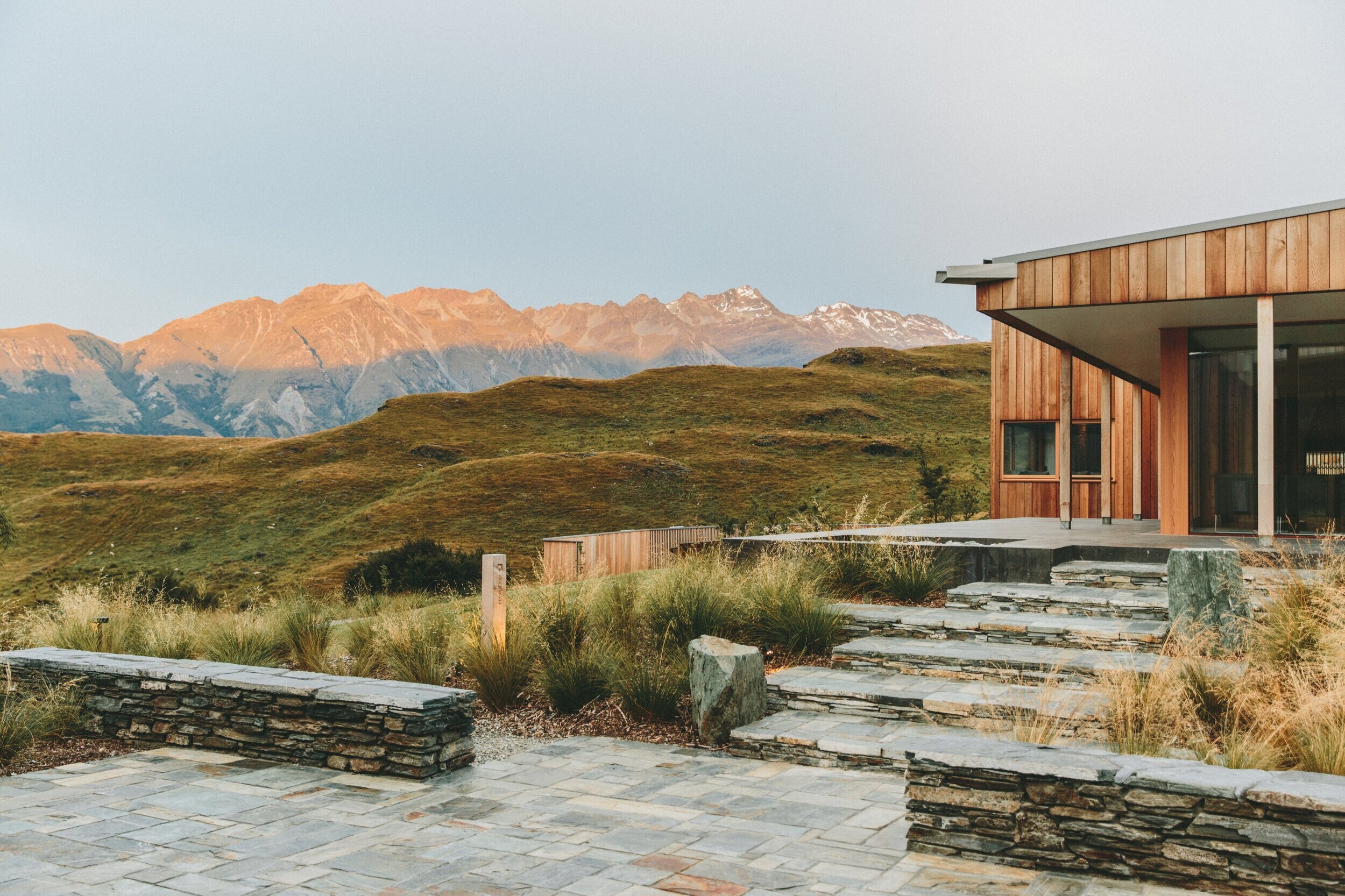
No one new what the state of the timber would be or what would be salvageable, but as it turns out the salt water acted to preserve the wood so most of it was in pristine condition. The logs were milled into a variety of dimensional shapes from cants to 4” thick live-edge slabs. Some was turned into high-end furniture and now a good portion of it is being processed into various components for musical instruments.
Where next?
So what's in store for this historic Sitka spruce? Maybe beautiful pieces of furniture or maybe musical instruments? Or maybe pieces of art? In any case we feel this is a story worth telling.
